Published Updated
Greek hotel demand peaks hard in August and falls away in winter. We read the monthly occupancy curve, the shoulder-month gains and what they mean for owners.
A Greek hotel does most of its year’s business in a few summer weeks. That single fact sits behind almost every decision an owner makes, from opening dates and staffing to how much debt a property can safely carry. ELSTAT’s 2025 hotel data shows bed-place occupancy in hotels and similar establishments at 12.7% in January and 81.3% in August.
The curve is steep, but it is not fixed. Inbound data for 2025 shows the autumn quarter carrying a larger share of visits than it did in 2019, and spring guests behave differently from summer ones. We cover arrivals, receipts and hotel supply in our overview of what the 2025 tourism data tells owners.
This piece stays with the calendar: the monthly curve, how concentrated Greek demand is compared with the rest of Europe, where the shoulder months are gaining, and what that means for how a hotel is run.
The monthly occupancy curve in 2025
ELSTAT publishes bed-place occupancy for hotels and similar establishments every month. It measures beds occupied against beds available, so it is not the same figure as the room occupancy a hotel tracks in its own system, but it shows the shape of the Greek year more clearly than anything else. Here is 2025 from ELSTAT:
| Month | Bed-place occupancy, hotels and similar, 2025 |
|---|---|
| January | 12.7% |
| February | 15.8% |
| March | 18.0% |
| April | 30.6% |
| May | 51.6% |
| June | 69.9% |
| July | 77.2% |
| August | 81.3% |
| September | 67.8% |
| October | 38.8% |
| November | 13.9% |
| December | 27.4% |
Source: ELSTAT, 2025 final data.
Read it as three blocks. January to March sit between 12.7% and 18.0%. April climbs to 30.6% and May to 51.6%. June to September run between 67.8% and 81.3%, with August at the top. Then the fall is sharp: 38.8% in October and 13.9% in November, before December rises to 27.4%, according to ELSTAT.
Across the whole year, bed-place occupancy in hotels and similar establishments averaged 50.7% in 2025, against 50.6% in 2024, in ELSTAT’s final figures. That average describes almost no actual month. Most months sit well above or well below it, and May, at 51.6%, is the closest. A budget built on the annual figure will be wrong in every season.
How concentrated Greek demand is
Eurostat compared peak-season concentration across the EU for 2025. In the EU as a whole, 31.1% of tourism nights fell in the two busiest months. In Greece, July and August together took 41.6%. Croatia, at 54.5%, and Bulgaria, at 43.4%, were more concentrated still.
The sharper figure is the gap between the best and worst month. Eurostat found that Greece recorded 20.5 times as many tourism nights in August as in January, against 3.6 times for the EU. For a hotel, that ratio is the difference between keeping a core team employed all year and rebuilding the staff every spring.
The Greek statistics say the same thing from another angle. ELSTAT reports that 56.7% of arrivals and 63.7% of nights in 2025 fell between July and October. Nights are more concentrated than arrivals, and nights are what fill beds and pay wages.

Photo: silversea on Unsplash, Delphi (Parnassus)
Where the shoulder months are gaining
The more useful question for an owner is whether the curve is flattening. INSETE’s 2025 inbound tourism report compares each quarter’s share of the year with 2019. The third quarter, July to September, took 52.4% of inbound arrivals and 52.9% of overnight stays in 2025. In 2019, those shares were 56.0% and 58.5%.
Much of that ground moved to the end of the year. INSETE reports that the fourth quarter gained 2.8 percentage points of arrivals and 3.8 percentage points of nights compared with 2019. October to December are still far quieter than summer, but more of the year’s inbound visitors arrived outside the peak in 2025 than before the pandemic.
Two cautions apply. These are shares of inbound travel, not hotel occupancy, so they show where demand is moving rather than how full any given property will be. And a national share says nothing about a particular island or city: a hotel in central Athens and a beach hotel in the Cyclades face very different autumns.
Spring guests are not summer guests
INSETE also breaks down spending and length of stay by quarter. In 2025, inbound visitors in the second quarter, April to June, spent an average of €103 per overnight stay, against €96 in the third quarter. They stayed longer, at 6.6 nights on average against 6.2, and spent €684 per trip against €596, according to INSETE.
Be precise about what those figures are. They measure what visitors spend per night across their whole trip, on accommodation, food, transport and everything else. They are not a hotel room rate and should not be read as one. What they do show is that the late-spring visitor is not a bargain guest filling empty beds. On the same measure, that visitor spends more per night than the peak-quarter guest.
Trips overall are getting shorter. The Bank of Greece reports that the average length of stay of inbound travellers fell 4.5% in 2025, to 5.6 nights from 5.9 in 2024. That is a different measure from INSETE’s quarterly figures, so the two should not be compared night for night. The direction is what matters: shorter stays mean more check-ins, more turnover and more rooms to resell to fill the same calendar.
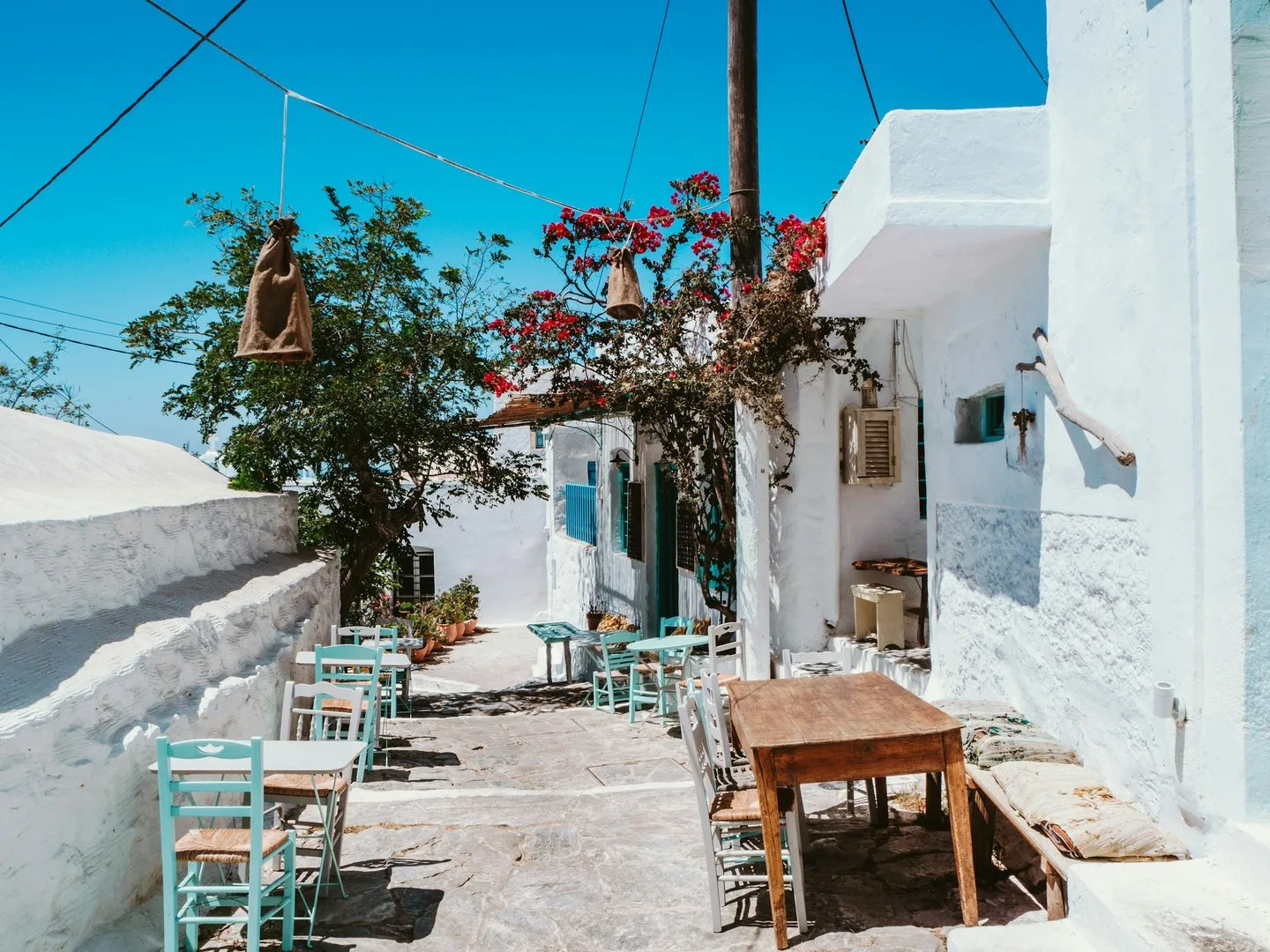
Photo: Johnny Africa on Unsplash, Amorgos
How hotels extend their season
Longer seasons are built, not wished for. A hotel that opens in late April and closes in early October is simply following the curve. A hotel that wants to open earlier or close later has to give a spring or autumn guest a reason to come, and that usually takes a mix of product, markets and pricing.
Product
Heating, indoor space, a restaurant that stays open, and experiences that do not depend on the beach, such as walking, food, culture and wellness. Many island properties were designed for high summer and nothing else, so adding shoulder-season product is often part of a wider plan. Our guide to repositioning an existing hotel in Greece covers category, product and season length in more detail.
Markets
Different guests travel at different times. Retired couples, walking groups, meetings and incentive groups, and city-break travellers fill different months from families tied to school holidays. A sales plan for a longer season should name the markets that travel in May and October, not only those that travel in August.
Pricing and cost control
Pricing decisions matter most at the edges of the season. In the peak, demand does much of the work. In April, May and October, the rate ladder, minimum stays, cancellation terms and channel mix decide whether an extra week of opening makes money or loses it. On the cost side, every week open carries payroll, energy and supplies, so the opening decision should rest on a forecast of what each extra week earns against what it costs. This is the work behind our revenue management and financial services discipline.
What this means for owners
Plan the year around the curve, not the average. An annual occupancy figure can hide a hotel that is overbooked in August and empty in March, so the budget, the staffing plan and any financing should follow the months rather than the mean.
Look hard at the shoulders. The shift toward autumn in the inbound data, and the higher spending per night of spring visitors, suggest that the weeks either side of summer are where extra revenue is most likely to come from. Whether a given property can capture it depends on its location, product and cost base, and that is worth testing with real numbers before changing opening dates.
If the swings are the problem rather than the opportunity, there is another route. Some owners prefer to hand over the operation in exchange for a fixed income, and we explain how leasing a hotel for guaranteed rent works and what to check before signing.
Either way, start with your own property’s monthly figures, set them against the national curve, and decide which months you are really in business for.
Frequently asked questions
When is peak tourism season in Greece?
Peak season runs through July and August, with June and September close behind. National data shows bed-place occupancy in hotels at its highest in August and its lowest in January, and Greece concentrates far more of its tourism nights in high summer than the European Union as a whole. Those summer weeks carry the hotel year.
Are hotels open in Greece in winter?
Many city hotels, especially in Athens and Thessaloniki, open all year, and so do some mountain and spa properties. Many island and beach hotels close from late autumn to spring, because demand falls away sharply after October. For a winter stay, check opening dates directly with the hotel before booking.
Is the tourism season in Greece getting longer?
Slowly. Compared with the years before the pandemic, the autumn quarter carries a larger share of inbound arrivals and nights, and high summer a smaller one. The summer peak is still very pronounced, so the change is gradual, but late spring and autumn are gaining ground for hotels that give guests a reason to come.
What is seasonal tourism?
Seasonal tourism is demand that clusters in certain months, usually because of weather, school holidays or events. In Greece it means a strong summer peak and quiet winter months, especially on the islands. For hotels, seasonality shapes staffing, opening dates, pricing and cash flow, because most of the year's revenue has to be earned in a few busy months.
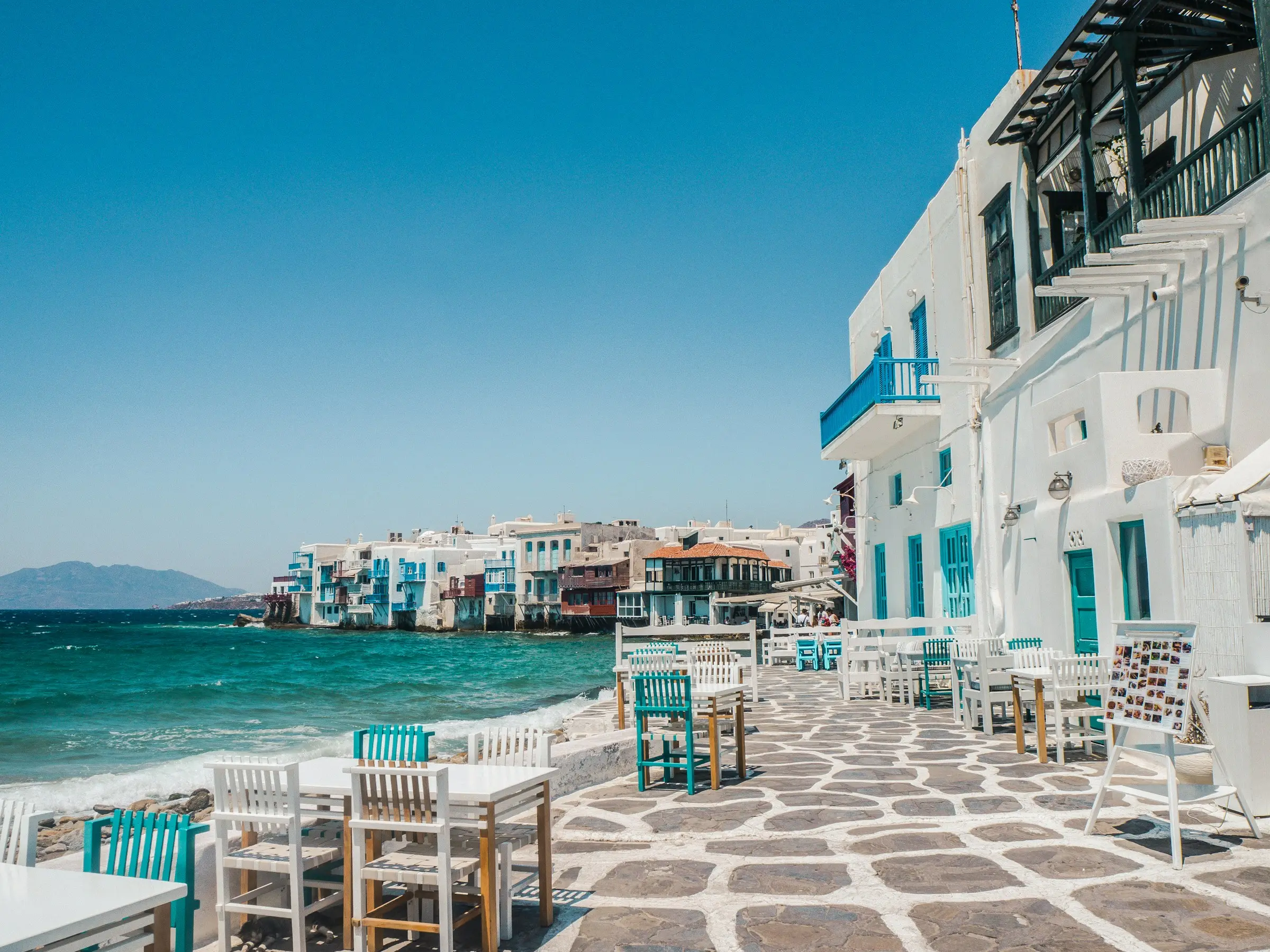
Cover photo: Johnny Africa on Unsplash, Little Venice, Mykonos. Unsplash License.