Published Updated
Repositioning a Greek hotel is more than a renovation. We walk through category, product, season length and the relaunch that gets the new hotel sold.
Most Greek hotels that need repositioning are not failing. They fill up in the peak weeks, sit quiet for much of the year, price themselves against the hotel next door and are fitted out for a guest who stopped coming some years ago. The building still works; the product around it has drifted away from the market.
Repositioning is the work of moving a hotel to a place in the market where it earns more per room and for more of the year. It touches four things, in order: the category you compete in, the product guests pay for, the length of season you can sell, and the relaunch that tells the market something has changed. A renovation on its own covers only the second.
This is how we approach it with owners, and what the public data says about where the openings are.
Renovation is not repositioning
A renovation replaces what is worn. Repositioning decides who the hotel is for, what they will pay and when they will come, and only then decides what to build. Owners who start with the architect often end up with a nicer version of the same hotel.
The order matters because each decision limits the next. A hotel aiming at couples on short breaks needs different rooms, a different breakfast and a different sales calendar from one built around families in August. Building for the wrong one is the most expensive mistake in the process.
So the first piece of work is a plain assessment: the current guest mix, where bookings come from, what the hotel earns in each month, and what competing properties within reach offer at each price point. Everything after that follows from it.
Category: where your hotel sits in the Greek stock
Greece has a large, mature hotel stock, and it is not spread evenly across the stars. ELSTAT’s 2025 hotel data, which reproduces Hellenic Chamber of Hotels figures, counts 10,118 hotels with 450,565 rooms. The lower and middle categories hold most of the properties, while the four- and five-star categories hold the largest blocks of rooms.
| Category | Hotels | Rooms |
|---|---|---|
| 5-star | 869 | 112,074 |
| 4-star | 1,932 | 133,018 |
| 3-star | 2,971 | 100,428 |
| 2-star | 3,215 | 83,679 |
| 1-star | 1,131 | 21,366 |
| Total | 10,118 | 450,565 |
Source: ELSTAT, 2025 final data (Hellenic Chamber of Hotels figures).
Read the table the way a buyer would. According to ELSTAT, 869 five-star hotels account for 112,074 rooms, so the typical five-star property is far larger than the typical two-star one. The 2,971 three-star and 3,215 two-star hotels are where many of the country’s smaller properties sit, and where many hotels end up competing mainly on price.
For a repositioning, category is a choice rather than a label. Moving up a star changes the set of hotels you are compared with, the guests who find you and the rate they expect. It also brings official classification requirements that an engineer should check before any design is fixed. Sometimes the better move is to stay in the same category and become the clear first choice within it.
Product: build for shorter stays and more spend per night
The guest is changing in ways that should shape the product. The Bank of Greece reports that average expenditure per overnight stay rose 7.7% to €96.6 in 2025, from €89.7 in 2024, while the average length of stay fell 4.5% to 5.6 nights, from 5.9. That is what visitors spent per night across their whole trip, not a hotel room rate, but the pattern is clear: travellers spent more on each night and stayed for fewer of them.
Shorter stays change the operation. More check-ins and check-outs per room mean more housekeeping turns, more laundry and more pressure on the front desk at the same hours of the day.
In practice that points to a few product decisions:
- rooms that work for short stays, where a good bed, a good shower and somewhere to sit outside matter more than wardrobe space
- a breakfast, bar and dining offer that earns spend from guests who are out during the day
- flexible arrival and departure, because the first and last hours of a short stay carry more weight
- fewer, better-finished room types rather than many that are hard to sell online
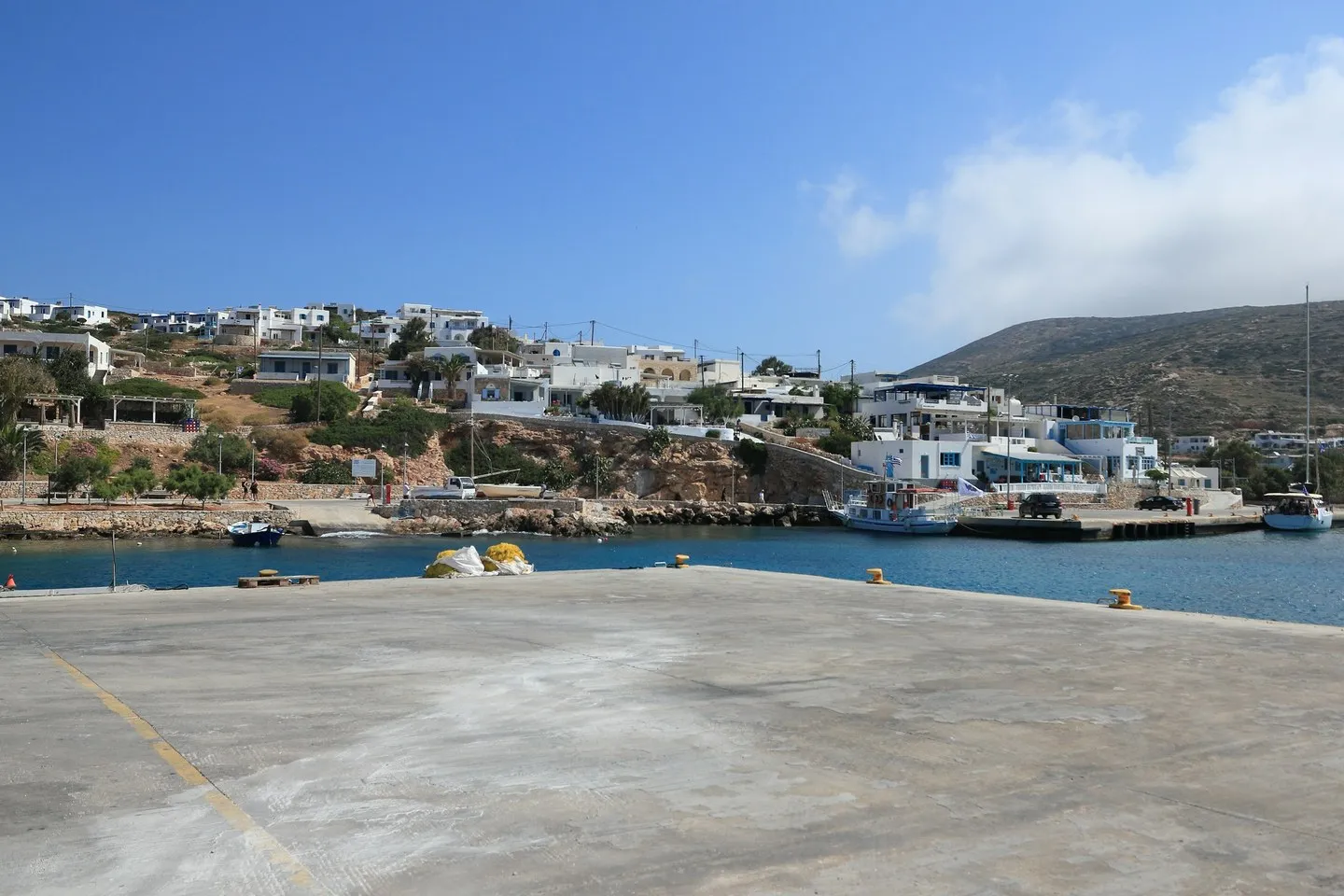
Photo: DD GR on Unsplash, Donousa
Season length: the biggest lever in most repositionings
For most Greek hotels, a longer season is worth more than any single change to the rooms, because Greek demand is unusually concentrated. According to Eurostat, 41.6% of Greece’s tourism nights in 2025 fell in July and August, against 31.1% across the EU. Greece’s August nights were 20.5 times its January nights, against 3.6 times for the EU as a whole.
The shoulder months are where ground is being gained. INSETE’s 2025 inbound tourism report shows that in 2025 the fourth quarter had gained 2.8 percentage points of arrivals and 3.8 points of overnight stays compared with 2019. The same report finds that second-quarter visitors in 2025 spent €103 per overnight stay against €96 in the third quarter, stayed 6.6 nights against 6.2, and spent €684 per trip against €596.
That is a practical argument for opening earlier and closing later, but extending the season is more than keeping the doors open. It needs heating and cooling that work outside summer, outdoor spaces that still appeal in cooler weather, a restaurant that makes sense when the village is quiet, and a sales plan aimed at couples, walkers and cultural travellers. Our look at the month-by-month Greek hotel occupancy curve shows how steep the drop-off is on either side of summer.
Brand: a position you can say in one sentence
Once category, product and season are settled, the hotel needs a position it can state in a sentence: who it is for and why they should choose it over the alternatives. That sentence drives the name, the photography, the website, the rate structure and the channel mix. Without it, a renovated hotel tends to be sold the way it was before, at the prices it charged before.
Owners usually face one of three routes. The hotel can stay independent with a sharper identity of its own. It can join a collection or soft brand that keeps its character while adding reach. Or it can sign with a chain, which brings standards, a loyalty base and a distribution system, along with fees and obligations that need careful reading. Our customised brand positioning strategy and chain partnership work covers that choice, from the positioning itself to managing the partnership once it is signed.
Hotel rebranding is also the moment to be honest about what should not change. Loyal repeat guests or a well-known family name can be worth more than a new identity.
The relaunch: getting the new product sold
A repositioned hotel reopens into a market that still remembers the old one. Online platforms, tour operators and past guests all hold the previous version: old photos, old reviews, old rates. The relaunch replaces that picture before the first new season is sold at the old prices.
That means new photography and content across every channel at the same time, rate structures rebuilt for the new competitive set, and a clear plan for which channels carry which kinds of demand. For sales and distribution we work with Loguers, our hotel sales and distribution partner, so the new product reaches the channels that suit it.
The balance between online travel agents and direct bookings deserves its own plan. Platforms bring reach in the first seasons after a relaunch, when the hotel has little search presence of its own, but they charge commission on every booking they deliver. Our breakdown of OTA commissions and direct bookings explains how Booking.com and Airbnb charge and how to build a direct channel alongside them.
The operation has to change with the product, from staff training to pricing. If the owner has run the hotel personally, this is often the point to look at what a hotel management company actually does and whether one should run the relaunch.
What this means for owners
Start with the market, not the building. Decide the category you want to compete in, the guest you want and the months you want to sell, and let those three decisions set the renovation budget.
- Check your category against the national stock and your local competitors before designing anything.
- Design for shorter stays and for spend beyond the room.
- Treat the shoulder months as the main prize, and build the product and sales plan around them.
- Plan the relaunch, including distribution and operations, as carefully as the building works.
A repositioning has worked when the hotel sells a different product to a different guest over a longer season, and that shows in the booking pattern of the seasons that follow.
Frequently asked questions
What is hotel repositioning?
Hotel repositioning means moving an existing hotel to a different place in the market: a new category, a different guest, a longer season or a new brand. It usually includes renovation, but it starts with market analysis, so the works are designed around the guest the hotel wants rather than simply replacing what is worn.
How do I upgrade my hotel star rating in Greece?
Greek hotels are classified against official criteria covering rooms, public areas, facilities and services. Before planning an upgrade, have an engineer and an adviser check the current requirements against your building, because some can be hard to meet in an existing structure. Then test whether the higher category actually brings the guests and rates the investment needs.
Is hotel renovation worth the investment?
It depends on what the renovation changes. Works that only replace worn finishes tend to protect the current business rather than grow it. Works tied to a clear repositioning, such as a new category, a longer season or a stronger brand, give the hotel a reason to charge more and sell more months.
Can a Greek island hotel extend its season?
Often, yes, but opening for longer is not enough. The hotel needs heating and cooling that work outside summer, facilities that appeal in cooler weather, a food offer that suits a quieter town and a sales plan aimed at guests who travel outside school holidays. Ferry and flight schedules to the island also set limits worth checking.
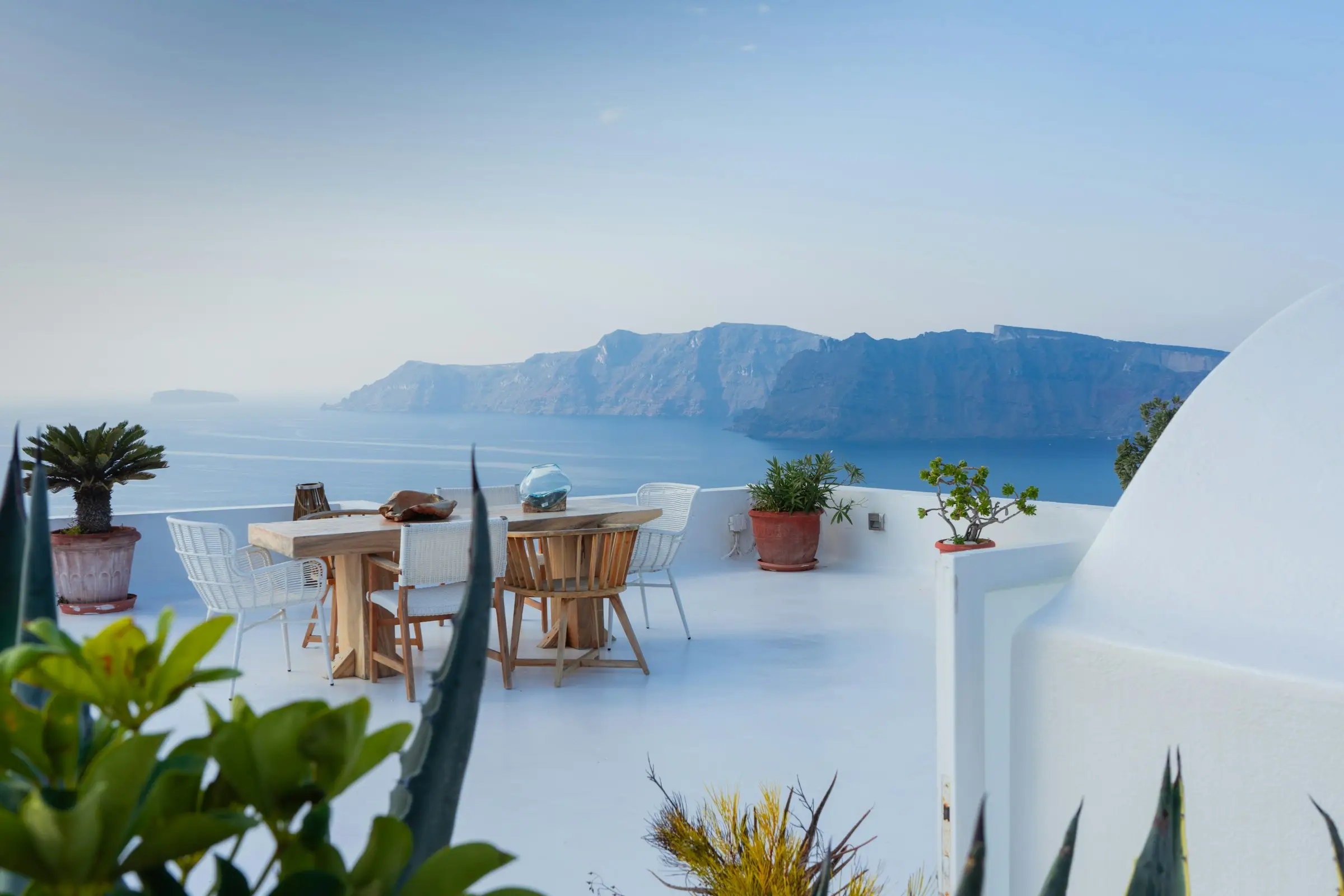
Cover photo: Sebastian Jacobsen on Unsplash, Santorini. Unsplash License.