Published Updated
A hotel lease trades upside for certainty. How long-term leases with guaranteed monthly rent work in Greece, and the clauses owners should read first.
Not every hotel owner in Greece bought or inherited a hotel to run it every day. Many simply want a good asset. A lease is the arrangement that keeps the asset in the owner’s hands and passes the daily operation, and most of its trading risk, to a tenant who pays rent.
This guide explains how a long-term hotel lease works in Greece, why a guaranteed monthly rent suits a market as seasonal as ours, and what an owner should check before signing any lease. It also sets out the lease that Finest Hospitality offers together with Just for Fund (JFF), our asset-management and real-estate partner.
The short version: a lease trades upside for certainty. Whether that trade is right depends on the building, the owner’s plans and, above all, on the tenant.
How a hotel lease works
Under a lease, the owner rents the whole hotel to an operator. The operator takes the revenue, pays the staff, suppliers, distribution costs and utilities, and pays the owner rent. If the season is strong, the operator keeps the surplus. If it is weak, the operator still owes the rent.
That is the key difference from a management agreement. Under a management agreement, the owner keeps the trading result and pays a manager to run the hotel, usually through a base fee combined with an incentive fee. The owner carries the ups and downs. Under a lease, the tenant does. We set out how management, lease and asset management compare in more detail, including who keeps the upside in each model.
Fixed rent and variable rent
Hotel leases generally use a fixed rent, a variable rent, or a blend of the two. A fixed rent is a set amount paid on a set schedule, however the hotel trades. A variable or turnover rent moves with the hotel’s revenue, sometimes on top of a fixed minimum.
A fixed rent gives the owner the most predictable income. A variable element hands back part of a good year, at the cost of certainty in a weak one.
A lease is not a sale and leaseback
Owners searching for “hotel sale and leaseback” are usually looking at a different deal. In a sale and leaseback, the owner sells the property to an investor and rents it back to keep operating. The seller gets capital but no longer owns the building.
The lease we describe here runs the other way. The owner keeps the building and hands over the operation.
Why guaranteed monthly rent matters in a seasonal market
Greek hotel revenue is not spread evenly through the year, and a lease with monthly rent smooths that out for the owner. ELSTAT’s 2025 hotel data puts bed-place occupancy in hotels and similar establishments at 12.7% in January and 81.3% in August. Across the whole of 2025, annual occupancy was 50.7%.
The same ELSTAT release shows that 56.7% of arrivals and 63.7% of nights in 2025 fell between July and October. The low months are very low: occupancy was 15.8% in February and 13.9% in November.
For an owner-operator, that means most of the year’s cash arrives in a short window, while insurance, maintenance, pre-season hiring and loan payments run all year. Winter is where cash flow gets tight.
A guaranteed monthly rent moves that timing problem to the tenant. The owner receives the same rent in February as in August, and the operator manages the seasonal cash cycle as part of running the business. If you want to see the full shape of demand, we break down the monthly occupancy curve for Greek hotels and where the shoulder months are gaining.

Photo: Johnny Africa on Unsplash, Sifnos
What the demand data means for a tenant, and for you
A tenant is only as good as its ability to pay, and that depends on demand. The national picture has been supportive. The Bank of Greece reports that travel receipts totalled €23,626.8m in 2025, up 9.4%, and that non-resident inbound travellers rose 6.4% to about 43.3 million, including cruise passengers.
Growth carried into 2026. According to the Bank of Greece, travel receipts in January–July 2026 rose 12.0% to €13,518.3m, and inbound traveller flows rose 8.6%.
The data also carries a caution. The same Bank of Greece release shows July 2026 receipts up 7.2%, while inbound flows in that month fell 3.1%. Revenue can hold up even when visitor numbers dip, but an operator has to work harder for it.
Stays are also getting shorter. For 2025, the Bank of Greece reported that the average length of stay fell 4.5% to 5.6 nights. Shorter stays mean more check-ins, more cleaning and more distribution cost for every night sold. A good tenant plans for that. A weak one feels it first, in the months when the rent still falls due.
This is the trade-off at the heart of leasing. When demand grows, an owner who keeps the trading result shares in it directly, while a leasing owner’s rent stays where it was agreed. When demand softens, the leasing owner is protected, provided the tenant is strong enough to keep paying. For the wider picture, see what the 2025 tourism data tells owners.
What to check in any hotel lease
The rent is the first thing owners look at. It should not be the only thing. These are the points we would want any owner to read closely, whoever the tenant is.
The tenant
Who is the operator, what have they run before, and what stands behind the rent? Ask how the tenant funds the business through the winter, and what security, if any, backs the payments.
Term, renewal and exit
A long term gives stability, but it also ties up the building. Check what happens if you want to sell, whether the lease passes to a buyer, and under what conditions either side can end it early.
Maintenance, repairs and capital works
The lease should say clearly who pays for day-to-day repairs, who replaces furniture, fixtures and equipment, and who funds structural works such as roofs, pools, plant and façades. Vague wording here is where many disputes start.
Licences, category and standards
The hotel’s operating licence and star category matter to the value of the property. The lease should require the tenant to keep them in good standing and to maintain the standard of product and service the owner expects.
Reporting and access
Even with a fixed rent, an owner should receive regular reporting on how the hotel is trading and should be able to inspect the property. It is the only way to know early whether the tenant is healthy.
Handover and return
Set out the condition the hotel must be in at the end of the lease, what happens to staff, and how bookings already on the books are handled at the start and at the end.
Take independent legal and tax advice on the draft. A hotel lease in Greece sits alongside property, labour and licensing rules, and those details matter more than any headline.
How the Finest Hospitality and JFF lease works
Our hotel-leasing offer is a venture between Finest Hospitality and JFF. The structure is simple: a long-term lease with a guaranteed monthly rent. The owner keeps ownership of the hotel, and Finest Hospitality runs the operation.
For the owner, that means the rent and the day-to-day running of the hotel sit with the same partnership. JFF brings the asset-management and real-estate side, and our portfolio page, which covers the asset-management portfolio we run in association with JFF, lists properties across Greece, including central Athens.
The offer sits within our real-estate Leasing Services for hotel owners. We would expect any owner to put every question from the checklist above to us, exactly as they would to any other tenant.
What this means for owners
A lease suits an owner who values predictable income over the swings of the season, does not want to run the hotel day to day, and wants to keep the building for the long term. It suits less well an owner who wants the full upside of a strong year, or who expects to sell soon.
Start with three questions: how much certainty you want, how long you are willing to commit the building, and how confident you are in the tenant. If the answers point towards a lease, read the terms line by line, and speak to our team when you want to discuss your property.
The right lease is the one that still looks sensible in February.
Frequently asked questions
How does leasing a hotel work?
The owner rents the whole hotel to an operator for an agreed term. The operator runs the business, collects the revenue, pays the running costs and pays the owner rent. The owner keeps the building and the title, while the tenant carries the trading risk of good and bad seasons.
What is the difference between a hotel lease and a management agreement?
With a management agreement, the owner keeps the trading result and pays a manager to run the hotel, so the owner carries the risk and keeps the upside. With a lease, the operator pays rent and keeps whatever the hotel earns above it, so the tenant carries the risk and the owner gets predictable income.
What is a hotel sale and leaseback?
In a sale and leaseback, the owner sells the hotel to an investor and then rents it back in order to keep operating it. The seller releases capital but gives up ownership. A standard hotel lease works the other way round: the owner keeps the building and hands the operation to a tenant.
Can I lease my hotel in Greece and keep ownership?
Yes. That is how a standard hotel lease works, and the Finest Hospitality and JFF offer is built on it: a long-term lease with guaranteed monthly rent, where the owner keeps ownership and Finest Hospitality runs the operation. Check the tenant, the term, the maintenance split and the exit terms before signing.
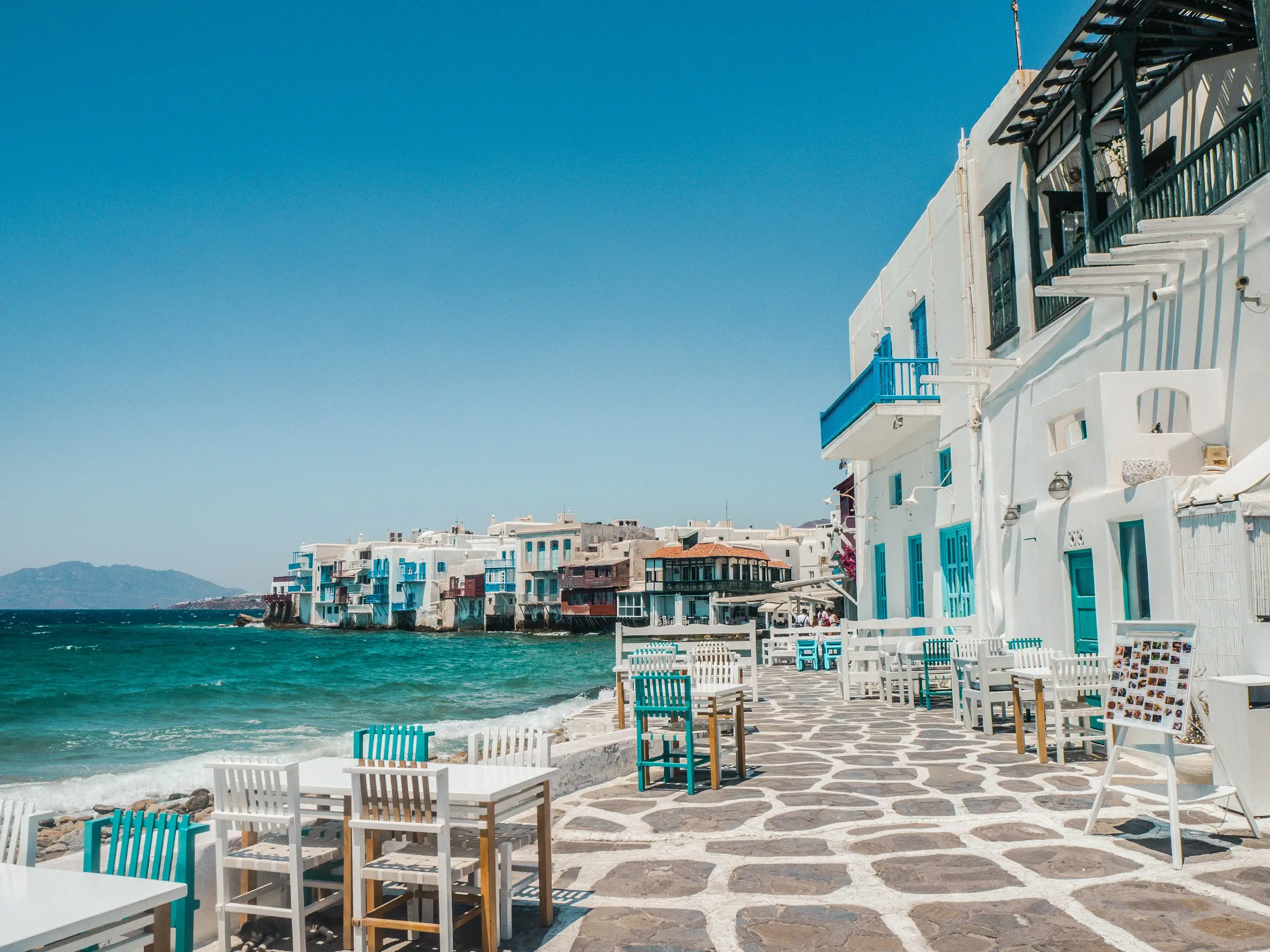
Cover photo: Karol Chomka on Unsplash, Mykonos. Unsplash License.