Published Updated
How to buy a boutique hotel in Greece: read the regional data, understand the hotel stock, run proper due diligence and have the right team in place before you sign.
Buying a boutique hotel in Greece usually starts with a listing and a photograph: a restored mansion in Athens, a whitewashed guesthouse on an island, a family hotel that has traded for decades. The photograph is the least useful part of the file. What decides whether the purchase works is the market the hotel sells into, the condition of the building and its licences, and who will run it once the keys change hands.
This guide takes the questions in the order we would: read regional demand, place the property in the national stock, check what property prices can and cannot tell you, do the due diligence, and assemble the team before you sign.
If the lifestyle side is part of your thinking, we have written about what the most-scenic ranking means for investors. Here we stay with the hotel as a business.
Read the region before the property
Greek tourism money is concentrated. In 2025, according to the Bank of Greece, travel receipts recorded by its Border Survey came to €22,607.1m, and five regions took 89.9% of them: South Aegean €6,624.8m, Attica €5,838.2m, Crete €4,342.6m, Ionian €1,902.2m and Central Macedonia €1,624.1m. A hotel outside those regions sells into a thinner stream of visitor spending and needs a clearer reason for guests to come.
Direction matters as much as size. INSETE’s inbound tourism report for 2025 shows Crete’s receipts fell 5.0% and the Ionian’s fell 4.1% against 2024, while Attica’s visits rose 10.5% and its receipts 22.9%. INSETE names Attica as the main driver of growth in 2025, with 920k additional visits (38% of the increase) and €1,087m of additional receipts (54%). Attica’s share of visits rose from 16.2% in 2019 to 23.2% in 2025, which INSETE links to city-break tourism.
None of this predicts a single hotel’s future. What the regional data gives you is the right question to put to the seller: is this hotel’s trading record better or worse than its region’s, and why?
Where a boutique hotel sits in the Greek hotel stock
The national stock is large and mostly small in scale. The table below reproduces the Hellenic Chamber of Hotels figures published with ELSTAT’s 2025 hotel data.
| Category | Hotels | Rooms |
|---|---|---|
| 5-star | 869 | 112,074 |
| 4-star | 1,932 | 133,018 |
| 3-star | 2,971 | 100,428 |
| 2-star | 3,215 | 83,679 |
| 1-star | 1,131 | 21,366 |
| All categories | 10,118 | 450,565 |
Source: ELSTAT, 2025 final data, Table 5 (Hellenic Chamber of Hotels).
Two things stand out for a buyer. The one-, two- and three-star categories hold most of the hotels but a minority of the rooms, so the typical Greek hotel is small and sits in the lower categories. The five-star category has the fewest hotels of all, yet more rooms than the three-star category, which points to larger properties at the top of the scale.
For a boutique buyer that cuts both ways. There is a lot of small stock to choose from, and that is where most boutique opportunities come from: an older two- or three-star property that can be rebuilt around a stronger product. But the star category is an official classification, not a marketing label, and moving a property up means meeting the requirements of the higher category. If an upgrade is the plan, read our guide on how to reposition an existing Greek hotel before you price the deal.
Occupancy: how full each region’s hotels were in 2025
Price follows trading, and trading follows occupancy. ELSTAT’s 2025 hotel data puts annual bed-place occupancy in hotels and similar establishments at 50.7% nationally. By region, ELSTAT reports 59.7% for the Ionian, 54.9% for Crete, 51.8% for the South Aegean, 51.6% for Central Macedonia and 51.2% for Attica.
Set that next to the receipts figures and the picture is mixed. The Ionian and Crete filled their beds at above the national rate in 2025, yet INSETE records receipts falling in both, by 4.1% and 5.0% respectively. Attica sat just above the national occupancy rate while its receipts grew 22.9%. Occupancy and spending measure different things, and a buyer needs both, plus the hotel’s own figures, to judge a region.
Bed-place occupancy is also an annual average across a very seasonal year. An island hotel with a short season still carries the building, the loan and the fixed costs in the months it is closed. Ask the seller for occupancy and revenue by month, not by year.
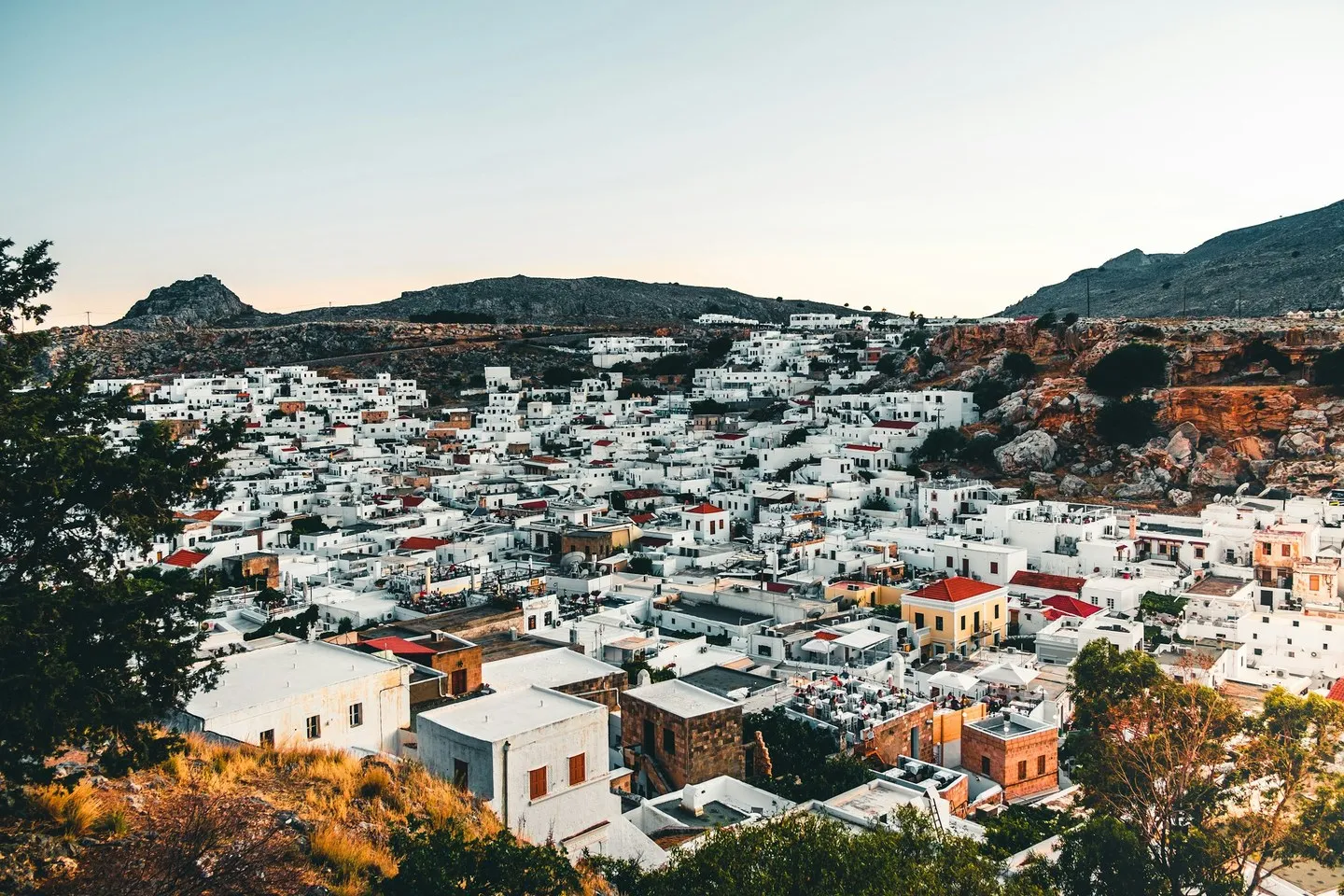
Photo: Serhat Beyazkaya on Unsplash, Rhodes
Property prices are a signal, not a hotel valuation
Buyers often point to residential prices. The Bank of Greece residential property price index shows apartment prices up 5.5% year on year nationally in Q2 2026, with Athens at +5.0%, Thessaloniki at +4.7%, other cities at +5.4% and other areas at +7.1%. The average annual increase was 8.3% in 2025 and 9.1% in 2024.
Those figures describe apartments. A hotel is valued as an operating business: on what it earns, what it could earn under better management, and what it will cost to get there. Rising residential values can support the land and building underneath a hotel, but they do not tell you whether the price asked for a hotel is fair.
A useful discipline is to build two valuations: one on the hotel’s actual trading record, and one on the business plan you believe in. If the asking price only works on the second, you are paying the seller for work you will have to do yourself.
Due diligence before you sign
A hotel purchase due diligence checklist in Greece covers the same ground as anywhere else, with extra weight on paperwork. You will need a Greek lawyer, a technical engineer and an accountant, and they should work from one shared list.
Title and permits
Confirm who owns the land and the building, that the title is clean, and that what stands on the site matches what was permitted. Older properties in particular can carry additions that were never regularised. Check the hotel’s operating licence and its official category, and confirm that both are current and in the seller’s name.
The trading record
Ask for several years of monthly revenue, occupancy and average rate, split by channel. Check how much comes through online travel agencies versus direct and repeat guests, and read the reviews. A boutique hotel’s reputation often sits with the current owner, so work out how much of it will leave with them.
The building and its systems
Commission a technical survey covering structure, roofs, plumbing, electrics, air conditioning, fire safety and accessibility. Price the capital spending the building needs in the first years of ownership, and add it to the purchase price rather than to a wish list.
Staff and contracts
Review employment contracts, seasonal staffing, supplier agreements and any tour-operator or allotment contracts. Some of these pass to the new owner with the business, and you should know which ones before you agree a price.
How you will run it
Decide the operating model before completion, not after. You can run the hotel yourself, appoint an operator under a management agreement, or lease it out. Each option places the risk and the upside with different people, and our guide comparing management agreements, leases and asset management sets out who carries what.
The team you need around the deal
Buying well is a team exercise. On the transaction side, our Property Sales and Investment Advisory team works with buyers from valuation to closing, and helps test a business plan against the market data above.
For buyers who want the property held and managed as an investment rather than run as a personal project, we work with Just for Fund (JFF), our asset-management and real-estate partner. Finest Hospitality runs hotel management and, in association with JFF, an asset-management portfolio; the portfolio page lists properties across Greece, including central Athens.
The part buyers most often leave late is distribution. A new owner inherits the old owner’s channel set-up, rates and contracts, and the first season shows whether they still work. Loguers, our hotel sales and distribution partner, is who we work with on the post-purchase sales and distribution plan, so that channels, pricing and source markets are settled before the first season under new ownership.
What this means for buyers
- Start with regional receipts and their direction, then compare the hotel’s own record with its region.
- Treat the star category as a fact to verify and, if you plan to change it, a project to cost.
- Use residential prices as context, and value the hotel on its trading.
- Choose the operating model and the distribution plan before completion.
A boutique hotel in Greece can be a good business, but the price you pay should reflect the hotel as it actually trades, not as it looks in the listing.
Frequently asked questions
What should a hotel purchase due diligence checklist include?
It should cover title and permits, the operating licence and official category, several years of monthly trading figures split by channel, a technical survey of the building and its systems, and the staff, supplier and tour-operator contracts. Your lawyer, engineer and accountant should work from one shared list.
Is Athens a good place to buy a boutique hotel?
Athens has grown into a strong city-break market, and the Attica region has gained a larger share of visits to Greece alongside growing visitor spending. That supports demand, but it does not make every property a good buy. Judge each hotel on its own trading record, the condition of its building and the price the seller is asking.
How is a boutique hotel for sale in Greece valued?
A hotel is valued as an operating business rather than as a building. Buyers look at what it earns, what it could earn under better management and what it will cost to get there. Residential property prices give useful context about the land and building, but they do not show whether a hotel's asking price is fair.
Do I need to run the hotel myself after buying it?
No. Owners can run the hotel themselves, appoint an operator under a management agreement, or lease it to an operator. Each model shares the risk and the upside differently. Decide before completion, because the choice shapes the business plan and the price you can justify.
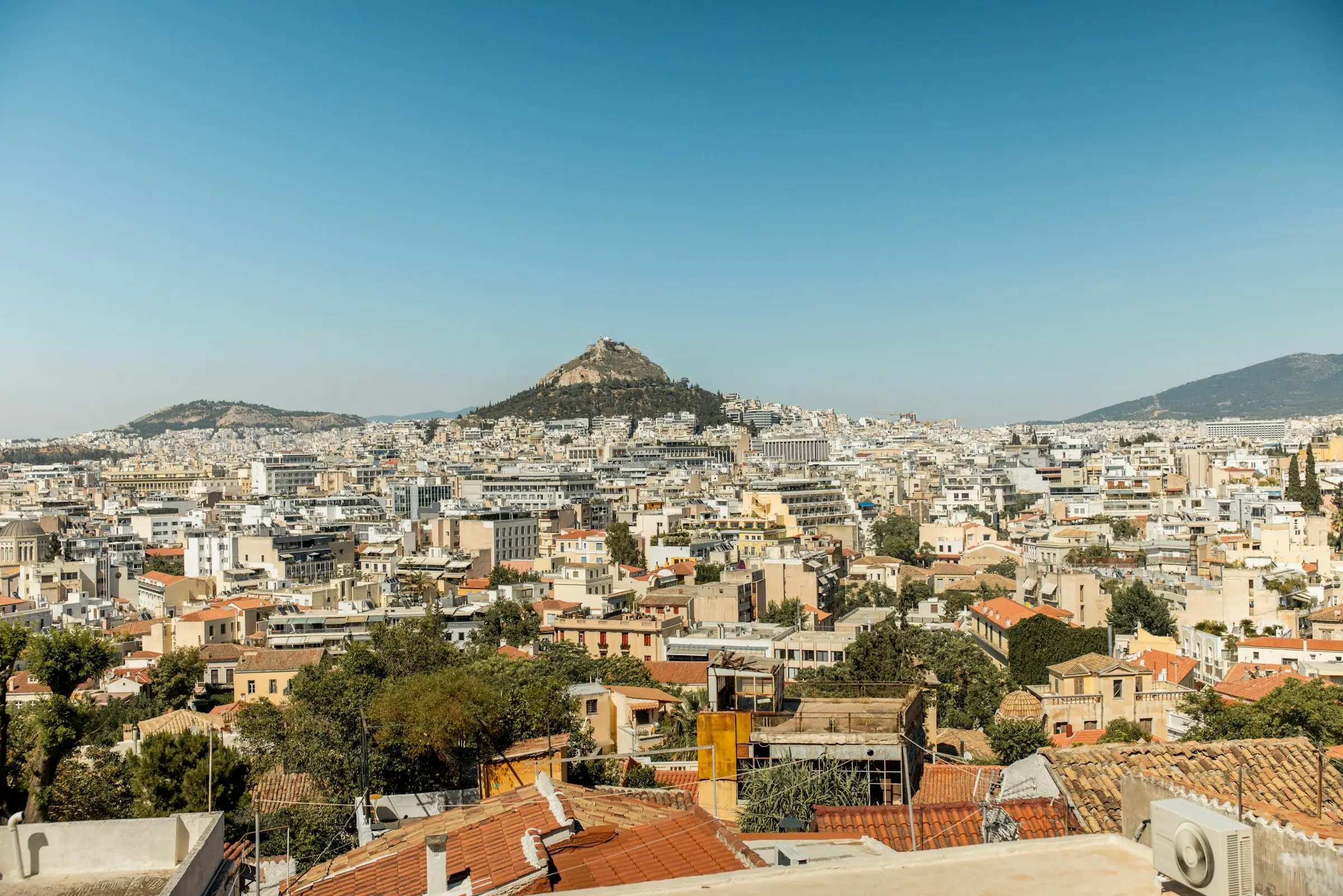
Cover photo: Anastase Maragos on Unsplash, Athens. Unsplash License.