Published Updated
Athens has become Greece's busiest region for visits, driven by short city breaks. Here is what the Bank of Greece, INSETE and ELSTAT data means for hotel owners.
For a long time, the Greek hotel story was an island story. Visitors flew in, spent a night in Athens if they had to, and moved on to the Cyclades, Crete or the Ionian. The data for 2025 describes a different market. Attica, the region around Athens, has become the country’s busiest region by visits, and it drove much of the growth in visitor spending.
The reason is the city break. Short trips, often of a few nights, spread across more of the calendar than a beach holiday. For hotel owners, that changes how a property earns its revenue: more arrivals, shorter stays and less dependence on July and August.
Below we set out what the official figures show for Athens and Attica, what they do not show, and what an owner or buyer should take from them. We keep one distinction throughout: visitor spending per night is not a hotel room rate.
Attica’s growing share of Greek tourism
INSETE tracks where visitors to Greece go. In its INSETE report on inbound tourism in 2025, Attica’s share of visits to Greece rose from 16.2% in 2019 to 22.3% in 2024 and 23.2% in 2025. INSETE names “City Break tourism” as the driver.
The Bank of Greece puts numbers on the same shift. According to the Bank of Greece’s 2025 travel balance release, Attica recorded 9,705.2 thousand visits in 2025, first among Greek regions, against 7,622.6 thousand for the South Aegean. Attica’s travel receipts reached €5,838.2m, second only to the South Aegean’s €6,624.8m.
On receipts, the gap between the city and the islands is narrow. The INSETE inbound tourism report gives Attica 26% of receipts in 2025 and the South Aegean 29%. For the wider picture of how 2025 went for Greek hotels, see our overview of the 2025 Greek hotel market data.
Where the growth came from in 2025
Attica did more than hold its position. In the INSETE report on 2025 inbound tourism, visits to Attica grew 10.5% on 2024, receipts grew 22.9%, and average expenditure per overnight stay grew 20.0%. Receipts growing faster than visits means each visitor spent more.
The INSETE inbound tourism report also describes Attica as the main driver of growth in 2025. The region added 920k visits, which was 38% of the national increase, and €1,087m in receipts, which was 54% of the increase. More than half of the new visitor spending in Greece that year was spent in Attica.
That does not mean every Athens hotel did well. Regional totals include every type of visitor and every kind of spending. They tell you the demand is there; they do not tell you how a particular property in a particular street performed.
A short-stay market with higher spend per night
The Attica visitor behaves differently from the island visitor. The INSETE inbound tourism report puts Attica’s average expenditure per overnight stay in 2025 at €119, against €97 nationally, and average expenditure per visit at €602, against €541. The average duration of stay in Attica was 5.0 nights.
For comparison, the Bank of Greece 2025 release puts the national average length of stay in 2025 at 5.6 nights. It also shows Attica with 48,984.1 thousand overnight stays in 2025 against 53,123.9 thousand for the South Aegean. Attica has more visits than the South Aegean but fewer nights, which is exactly what a short-stay market looks like.
What spend per night measures, and what it does not
Average expenditure per overnight stay is total visitor spending per night of the trip, accommodation included. It is not a hotel room rate and not an ADR. A visitor who spends more per night in Athens may be spending it in restaurants rather than at the front desk.
What the figure does tell an owner is that Athens visitors are spending more per day of their trip than the national average. That supports spending on food and beverage, experiences and anything else a hotel can sell beyond the room. Whether it supports a higher room rate is a question for your own booking data and your local competitors.
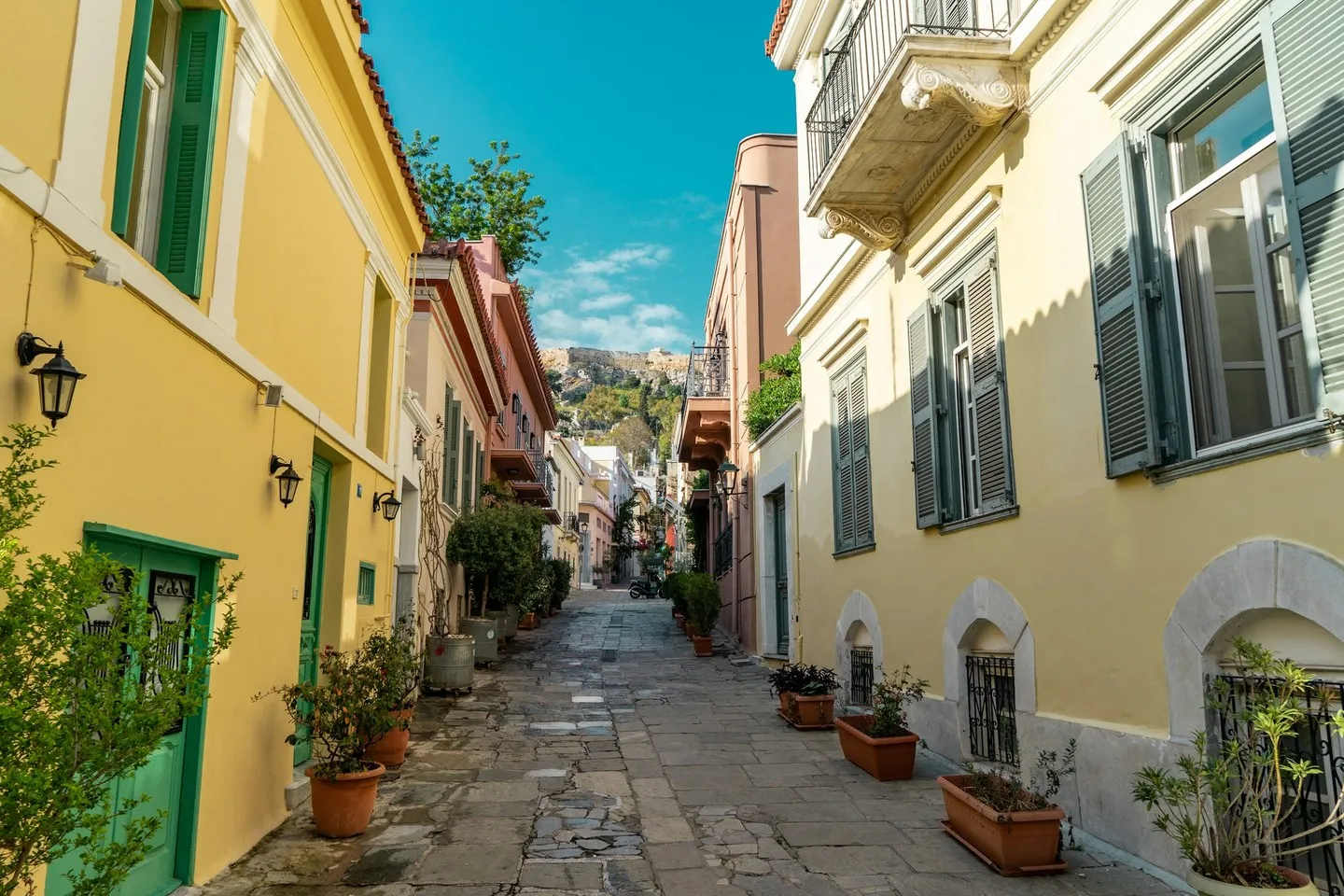
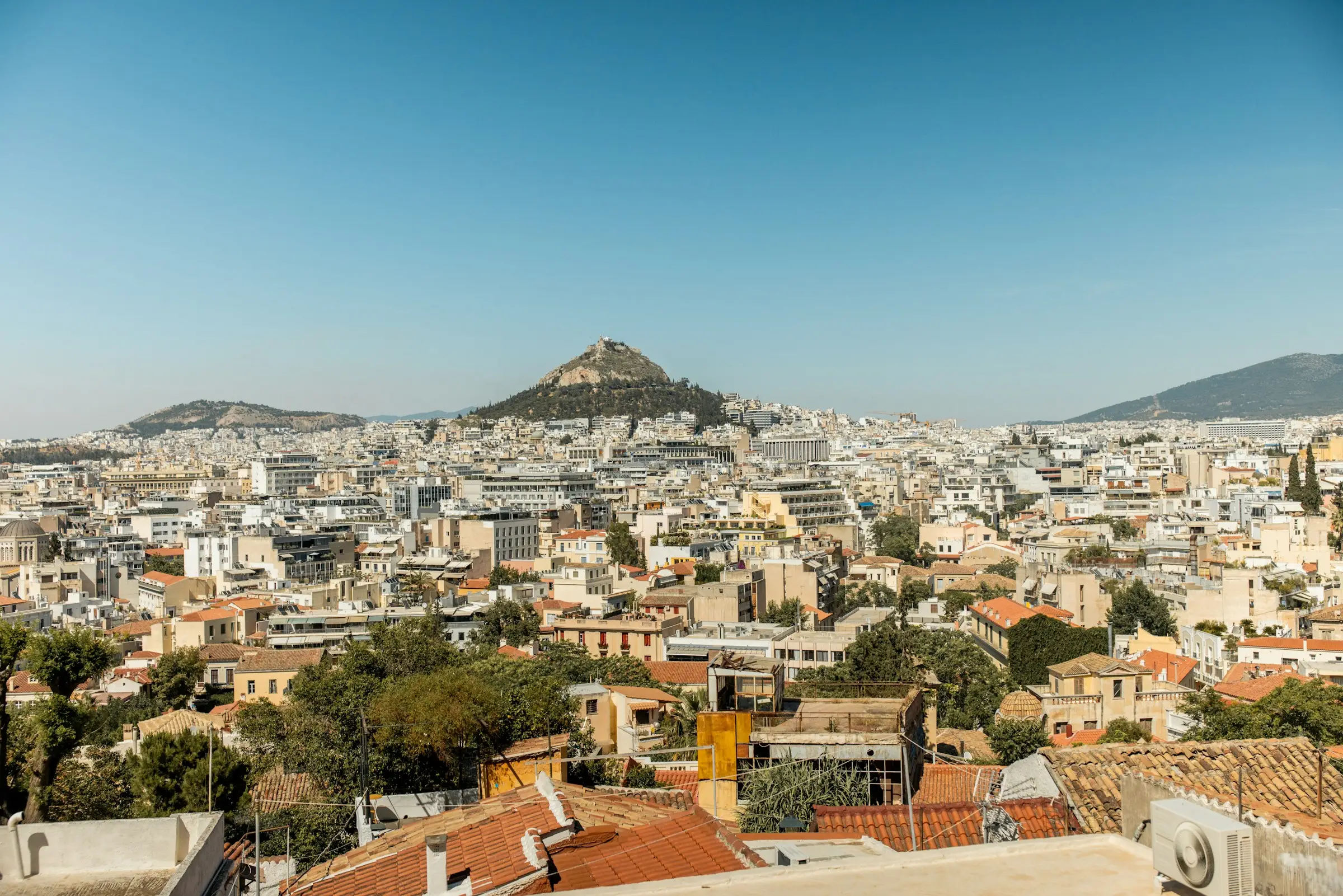
Photo: Matt Cramblett on Unsplash, Plaka, Athens
Occupancy and a longer year
Occupancy in Attica sits close to the national figure. ELSTAT’s 2025 hotel data gives annual bed-place occupancy in hotels and similar establishments in 2025 of 51.2% in Attica, against 50.7% nationally and 59.7% in the Ionian. On annual occupancy alone, Athens is not the top performer.
The difference is in the shape of demand. A city break does not need beach weather, so an Athens hotel can sell rooms in months when many island properties are closed. Annual occupancy figures hide that, because they average the whole year together. An owner comparing an Athens property with an island one should look at how many months each is open and what each earns in its weakest months, not only at the annual rate.
Business travel adds a further layer. The INSETE 2025 inbound report shows business travel’s share rising from 5% in 2019 to 7% in 2025. The Bank of Greece puts business trips at 6.7% of travel receipts across Greece in 2025, up from 6.5% in 2024. Meetings, conferences and corporate stays tend to gather in a capital city, and they do not follow the holiday calendar.
| Attica, 2025 | Figure |
|---|---|
| Visits | 9,705.2 thousand |
| Travel receipts | €5,838.2m |
| Overnight stays | 48,984.1 thousand |
| Share of visits to Greece | 23.2% |
| Share of receipts | 26% |
| Bed-place occupancy, hotels and similar | 51.2% |
Source: Bank of Greece, INSETE and ELSTAT, 2025 data.
Buying or investing in an Athens hotel
Demand is one side of an investment case. The other is what you pay for the building. We have no hotel price index to point to, but residential prices give a sense of the property market around a hotel. The Bank of Greece residential property price index shows apartment prices in Athens up 5.0% year on year in Q2 2026, against 5.5% nationally. Apartment prices rose by an average of 8.3% across Greece in 2025.
Rising property prices raise the entry cost for a new hotel buyer and the alternative value of a building for an existing owner. A central Athens property can often be a residential building, a short-let block or a hotel. The question is which use gives the best return after licensing, conversion and operating costs, and that needs a building-by-building answer. Our guide to buying a boutique hotel in Greece covers the due diligence in more detail.
In central Athens, the building usually matters more than the region. Street, noise, the view of the Acropolis, access to a metro station and the condition of the building all shape what a property can achieve. Two hotels in neighbouring streets can have very different results. Our Investment Advisory & Consulting team works through these questions with buyers before they commit.
Finest Hospitality runs hotel management and, in association with Just for Fund (JFF), an asset-management portfolio. Our portfolio page lists properties across Greece, including properties in central Athens neighbourhoods such as Kolonaki, Plaka, Psyrri and Thissio.
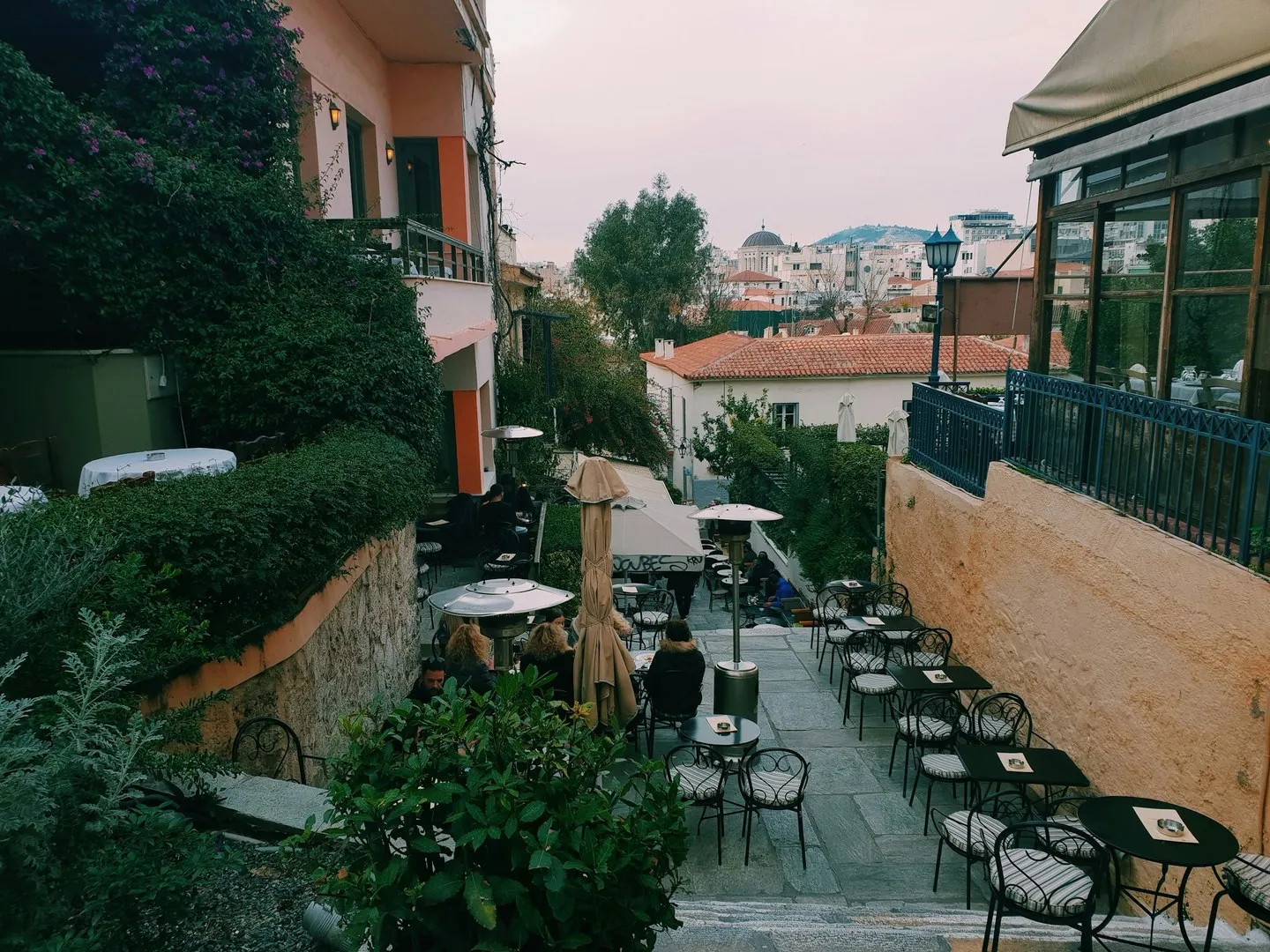
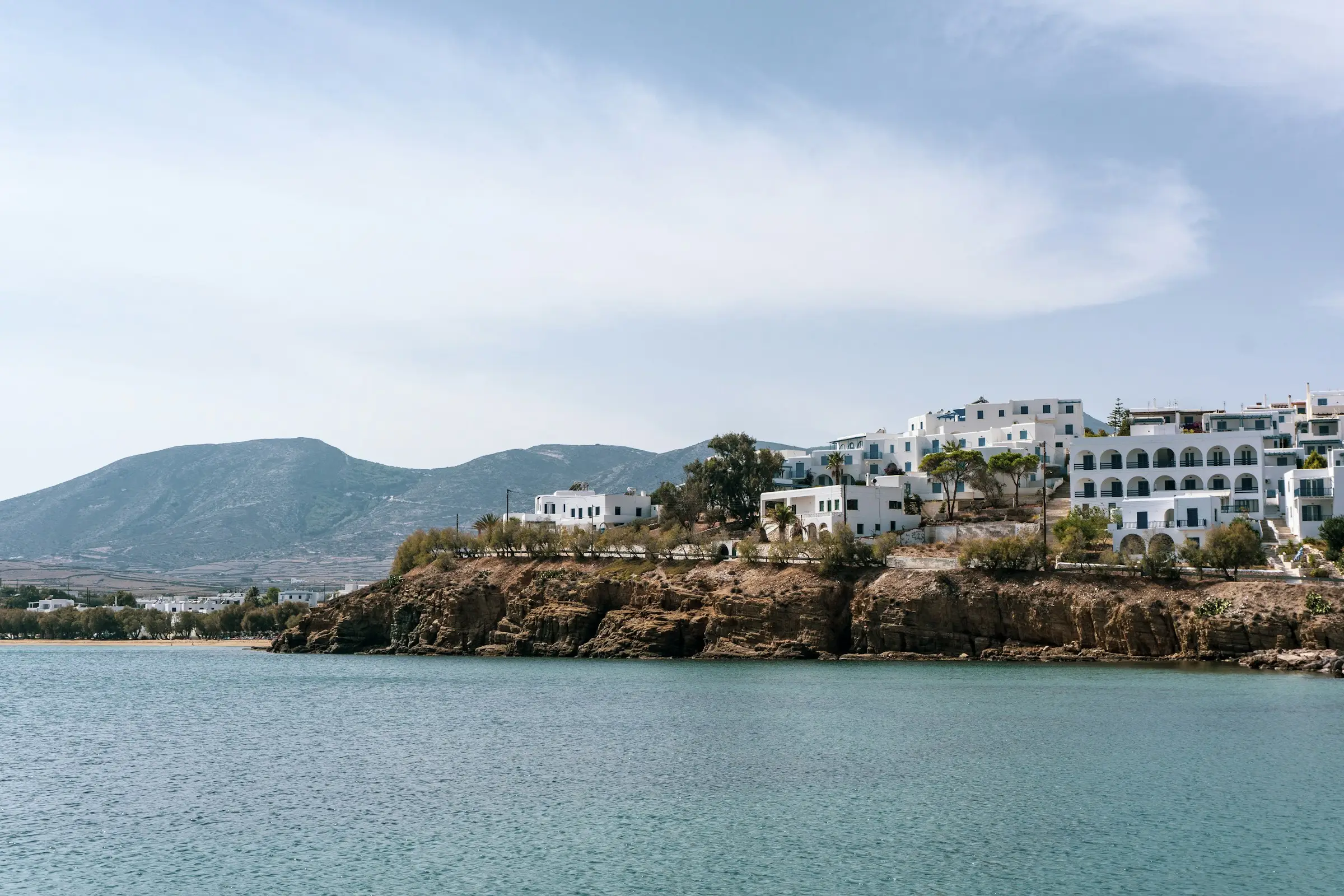
Photo: silversea on Unsplash, Plaka, Athens
Choosing how to run an Athens property
Short stays change the operating model. More check-ins per night sold means more reception hours, more housekeeping turns and more distribution work to keep the calendar full. A city hotel lives on its booking channels and its revenue management far more than a resort with long, pre-booked summer stays.
That is why the question of who runs the hotel matters as much as the purchase. Some owners want to operate the property themselves with a management company. Others prefer a fixed income and hand the operation over. Our comparison of management, lease and asset management sets out who carries the risk and who keeps the upside in each model.
What this means for owners
The 2025 data points to a few practical steps for anyone who owns or is buying a hotel in Athens:
- Plan for short stays. Staffing, housekeeping and check-in need to handle frequent turnover, not a slow summer rhythm.
- Sell more than the room. Visitors in Attica spend more per night than the national average, and much of that goes outside the room.
- Use the whole calendar. A city break is not tied to the beach season, so the months islands close are open for trade in Athens.
- Judge the building, not the region. Regional growth is real, but each property’s street, condition and licence decide its result.
- Don’t read visitor spend as room rate. Test pricing against your own booking data and your nearest competitors.
Athens has become a market in its own right rather than a stopover on the way to the islands, and it rewards owners who run their hotels as city hotels.
Frequently asked questions
How many tourists visit Athens each year?
Attica, the region that includes Athens, received more visits than any other Greek region in the Bank of Greece's full-year data, ahead of the South Aegean islands. Its share of all visits to Greece has grown since before the pandemic, and INSETE attributes much of that growth to city-break tourism.
How long do tourists stay in Athens?
Visitors to Attica stay for a shorter time than the average visitor to Greece, which fits the city-break pattern of short trips. For a hotel, shorter stays mean more arrivals, more check-ins and more turnover for every night sold, so staffing, housekeeping and distribution need to be planned around that rhythm.
Is Athens a good place to invest in a hotel?
Athens has growing visitor numbers and rising visitor spend, and it is less dependent on a single summer season than the islands. That does not make every building a good hotel. Location, licensing, the condition of the asset and the operating model still decide the return, so each property needs its own due diligence.
Does higher visitor spending in Athens mean higher hotel room rates?
Not necessarily. The spending figures in the official data measure what visitors spend in total per night of their trip, including food, transport and shopping. They are not hotel room rates. Owners should look at their own booking data and local competitors before drawing conclusions about pricing.
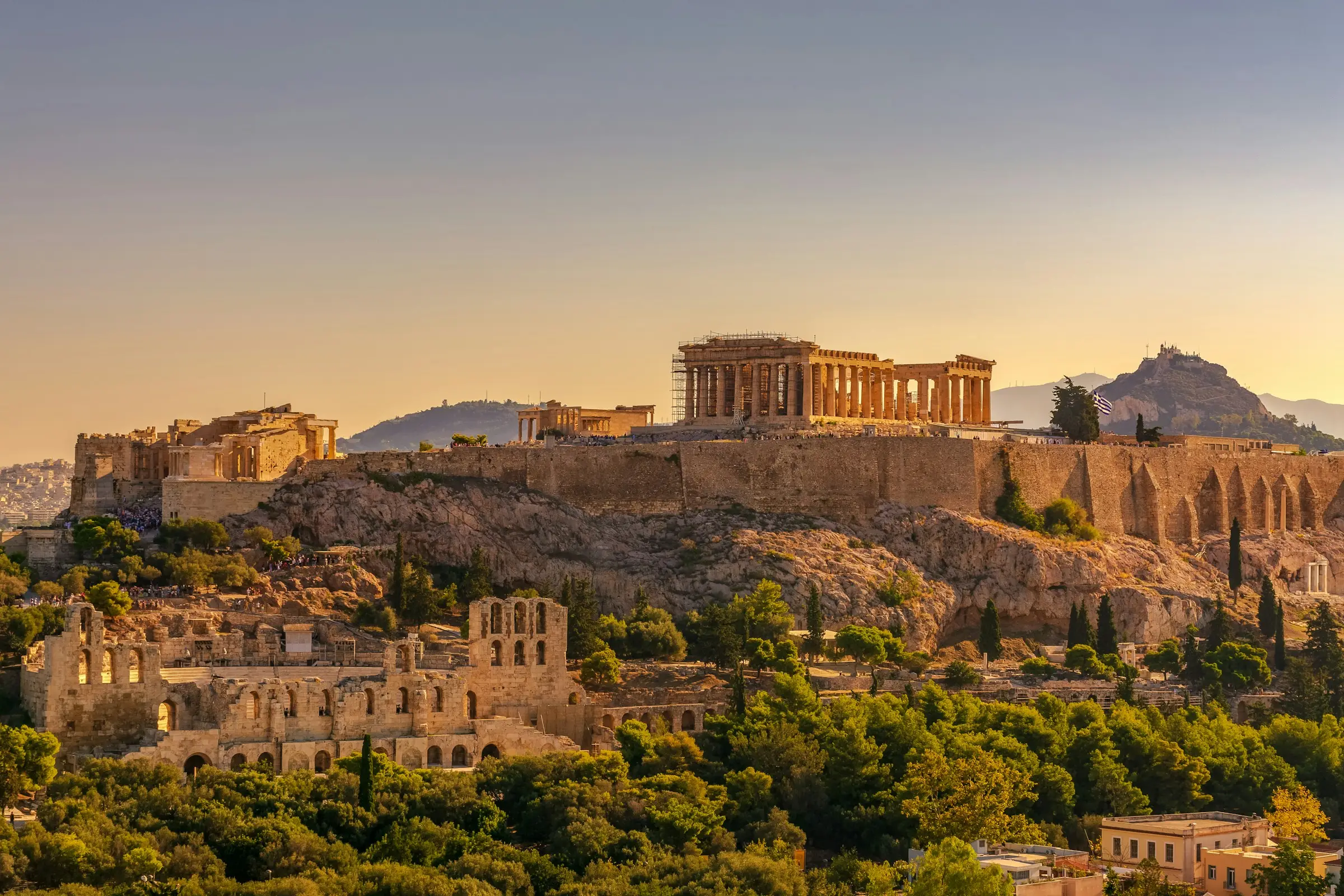
Cover photo: Constantinos Kollias on Unsplash, Acropolis, Athens. Unsplash License.